




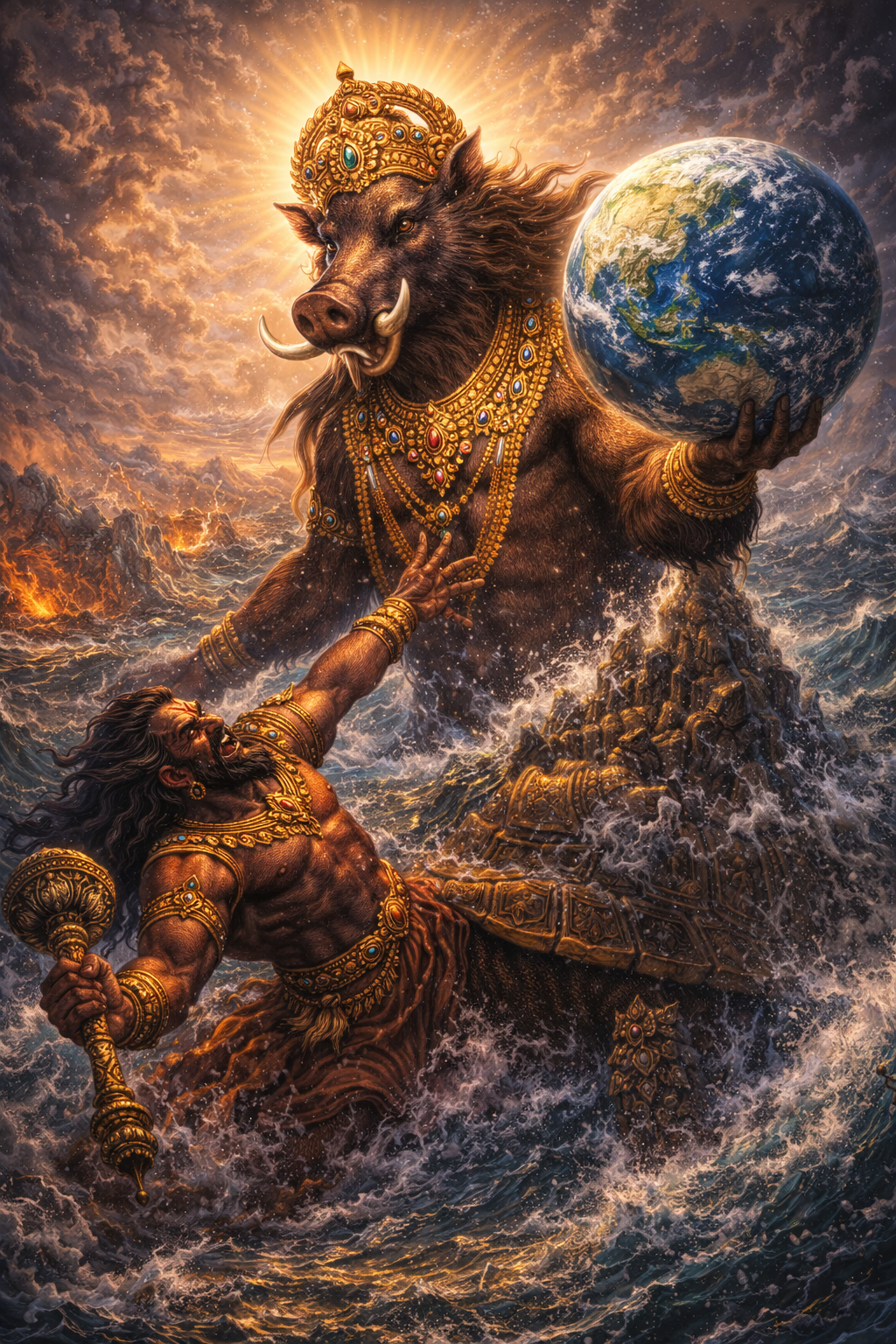
Varāha Avatāra (Third Avatāra) – The Divine Lifter of the Earth
The Avatāra Who Rescued Dharma from the Depths of Chaos
Varaha is the third avatāra of Vishnu in the Daśāvatāra sequence.
After Matsya (1st) preserved knowledge and Kūrma (2nd) provided stability, Varāha appears when Dharma itself loses its foundation—the Earth.
After the stability of Kurma, the next incarnation is Varaha Avatara.
Varāha represents decisive, protective action, where righteousness is not just supported, but forcefully restored.
The Condition of the World at the Time
The powerful asura Hiranyaksha defeated the Devas and dragged Bhūmi Devī (the Earth) into the depths of the cosmic ocean.
With the Earth submerged:
- Life could not survive
- Order collapsed
- Dharma had no ground to stand upon
Cosmic balance was severely threatened.
The Appearance of Varāha
To restore order, Lord Vishnu incarnated as Varāha, the divine boar. Emerging small at first and then expanding to a cosmic size, Varāha symbolized controlled power guided by purpose.
This avatāra marks a shift—from silent support to direct confrontation with Adharma.
The Battle with Hiranyaksha
Varāha plunged into the primordial waters and fought Hiranyaksha in a long and fierce battle. Their clash represented the eternal struggle between:
- Arrogance and responsibility
- Chaos and order
- Adharma and Dharma
Varāha ultimately defeated the asura, ending the oppression.
The Rescue of the Earth
After the victory, Varāha gently lifted Bhūmi Devī from the ocean depths and placed her back in her rightful cosmic position, resting safely on his tusk.
This act restored:
- The physical world
- The balance of creation
- The foundation of Dharma
Symbolism of the Varāha Avatāra
- Boar – Fearless strength and determination
- Ocean depths – Ignorance and chaos
- Earth on the tusk – Power used with care and responsibility
- Battle – Necessary action against entrenched Adharma
Varāha teaches that true protection may require courage and confrontation.
Spiritual and Modern Relevance
Varāha Avatāra reminds us that:
- Deep-rooted problems need courageous solutions
- Dharma must sometimes be actively defended
- Strength is sacred when it serves life and balance
On a personal level, Varāha inspires us to face inner darkness and lift ourselves back to stability.
Simple Takeaway
When Dharma sinks into chaos, it must be lifted with courage.
The Third Avatāra shows that protection sometimes demands bold action.
🪔 Key Lessons from Varāha Avatāra (3rd Avatāra)
- Dharma must be actively restored
- Strength and compassion can coexist
- Deep problems require deep engagement
- Power is righteous when used to protect
- Facing darkness is essential for renewal
🔍 Short Summary
The Varāha Avatāra (Third Avatāra of Vishnu) marks the moment when the Earth itself was rescued from chaos. By defeating Hiranyaksha and lifting Bhūmi Devī from the cosmic depths, Lord Vishnu restored the very foundation of life and Dharma. Varāha teaches that when righteousness is buried, it must be courageously brought back into the light.
After the Earth was rescued, the next challenge to Dharma led to the appearance of Narasimha Avatara.


