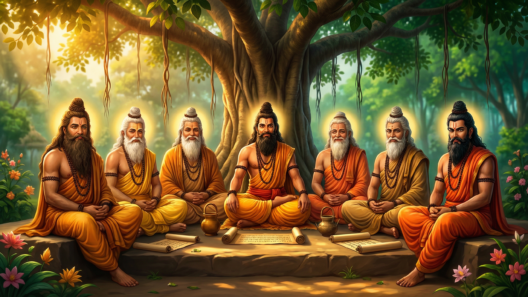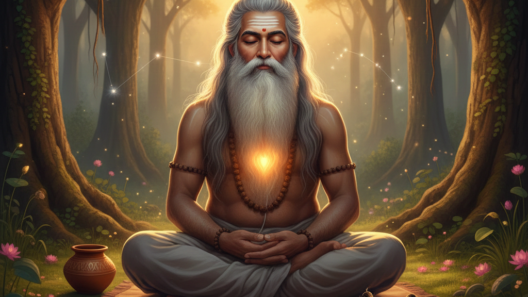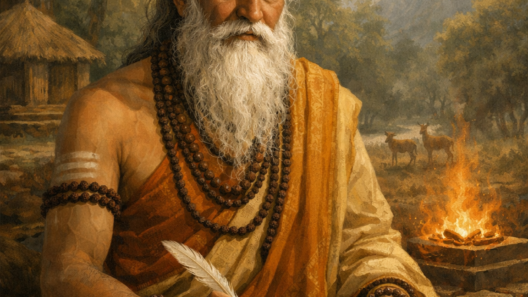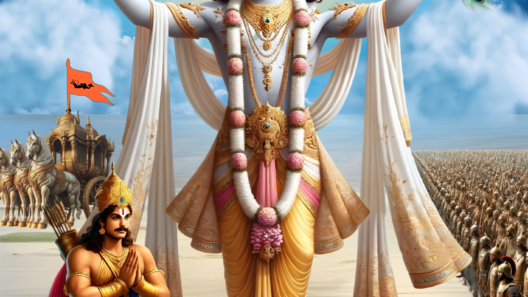



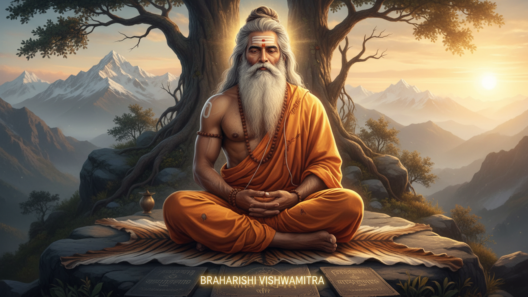

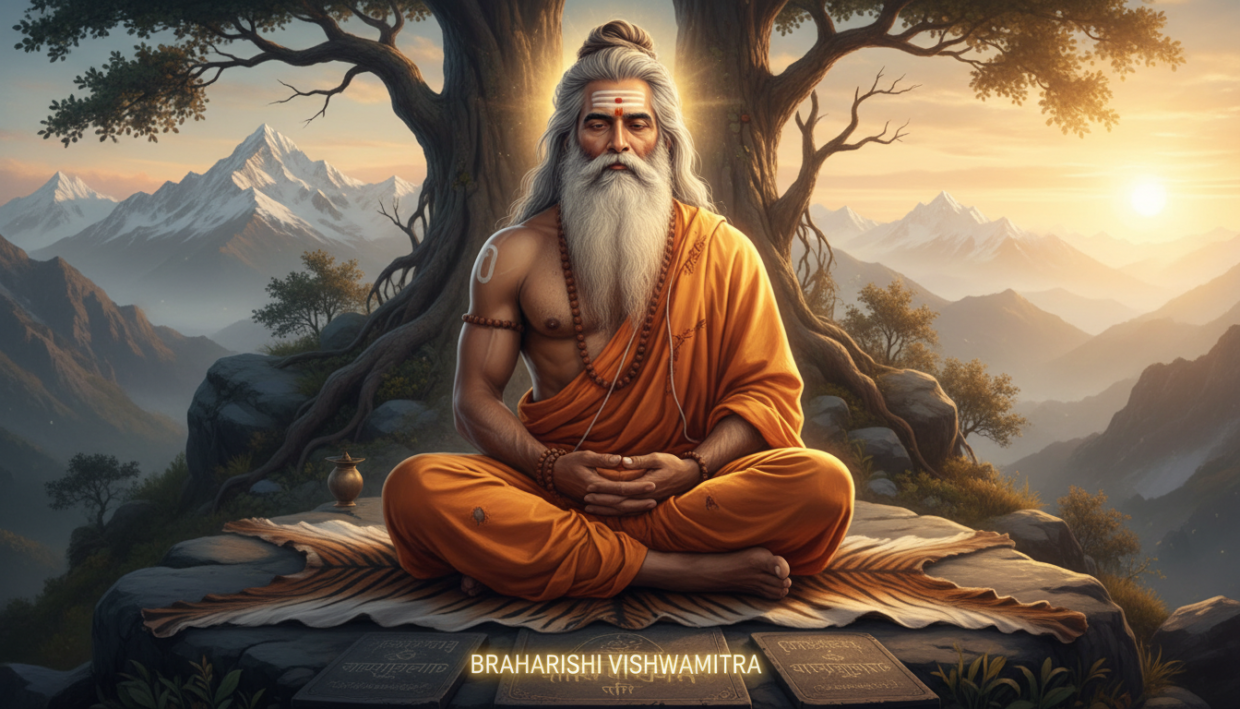
Maharishi Vishwamitra is revered as a Brahmarishi whose journey embodies human potential at its highest. Unlike many sages who were born into ascetic lineages, Vishwamitra began his life as a powerful king, immersed in authority, ambition, and control. Through relentless tapas, inner struggle, failure, and refinement, he rose to the highest spiritual realization.
If Maharishi Vashistha represents effortless wisdom, Maharishi Vishwamitra represents earned wisdom—realization forged through determination, humility, and inner conquest.
The Spiritual Role of Maharishi Vishwamitra
Maharishi Vishwamitra occupies a unique and inspiring place in Sanatana Dharma:
He represents transformation through effort
He demonstrates that spiritual realization is attainable by all
He embodies mastery over desire, anger, and ego
He bridges royal power and ascetic wisdom
Through Vishwamitra, Sanatana Dharma teaches that no past binds the future when awareness awakens.
Meaning and Inner Significance of the Name “Vishwamitra”
The name Vishwamitra means:
“Friend of the world”
“One who embraces all creation”
“One whose vision is universal”
This name reflects the culmination of his journey—when personal ambition dissolved into compassion for all beings.
From King Kaushika to Maharishi Vishwamitra
Vishwamitra was originally King Kaushika, a ruler of immense power and pride. His life took a decisive turn after encountering Maharishi Vashistha.
When Kaushika witnessed Vashistha’s inner abundance and spiritual authority, he realized:
Power derived from weapons is limited
Power rooted in consciousness is supreme
This realization ignited a fire within him—not of conquest, but of self-transformation.
The Long Path of Tapas and Inner Struggle
Vishwamitra’s tapas was intense and prolonged. His journey was not linear; it included:
Periods of immense progress
Moments of failure and relapse
Struggles with anger, desire, and pride
Unlike effortless sages, Vishwamitra’s story teaches that falling does not negate progress.
Each setback refined his awareness, stripping away ego until only clarity remained.
Conflict with Vashistha: Ego Refined into Wisdom
The well-known tension between Vishwamitra and Vashistha is deeply symbolic.
Where Vishwamitra relied on:
Force
Willpower
Achievement
Vashistha embodied:
Inner stillness
Non-reaction
Natural authority
Over time, Vishwamitra recognized that true mastery arises not from dominance, but from surrender of ego.
This realization marked the turning point of his transformation.
Attainment of Brahmarishi Status
After prolonged tapas and inner purification, Vishwamitra attained the highest spiritual recognition—Brahmarishi.
This was not granted lightly. It symbolized:
Complete mastery over the senses
Freedom from ego and resentment
Establishment in universal consciousness
Vishwamitra’s elevation affirms a core Sanatana Dharma truth:
Spiritual status is achieved, not inherited.
Creator of the Gayatri Mantra
One of Vishwamitra’s greatest contributions to humanity is the revelation of the Gayatri Mantra, the most sacred and widely recited mantra in Hindu tradition.
The Gayatri Mantra represents:
Illumination of intellect
Awakening of inner light
Alignment with cosmic intelligence
That this mantra emerged from Vishwamitra is deeply symbolic—a sage who struggled with darkness revealed the mantra of light.
Vishwamitra and the Ramayana
Maharishi Vishwamitra played a pivotal role in shaping Lord Rama’s destiny.
He:
Recognized Rama’s divine potential early
Guided him through spiritual and martial training
Introduced him to higher responsibility and discipline
Without Vishwamitra’s guidance, Rama’s path toward kingship and Dharma would have been incomplete.
Marriage, Desire, and Transcendence
Vishwamitra’s story does not shy away from human vulnerability.
His encounters with desire during tapas illustrate:
The persistence of subconscious tendencies
The necessity of self-honesty
The gradual purification of mind
Unlike idealized narratives, Vishwamitra’s life shows that spiritual growth includes confronting inner shadows.
Spiritual Significance: Transformation Through Effort
Maharishi Vishwamitra represents:
Human will refined into wisdom
Discipline transformed into compassion
Effort crowned by surrender
He teaches that effort is necessary until understanding becomes natural.
Maharishi Vishwamitra and Natural Meditation
In the context of Natural Meditation, Vishwamitra represents the transition from effort to ease.
The Vishwamitra Practice (From Striving to Surrender)
When striving dominates the mind:
Sit quietly and notice the effort to control
Acknowledge the striving without judgment
Gradually relax the need to achieve
Allow awareness to settle naturally
This mirrors Vishwamitra’s journey—from force to flow.
Symbolism of Maharishi Vishwamitra
Bow and ascetic fire – Disciplined will
Gayatri Mantra – Inner illumination
Transformation from king to sage – Human potential
Universal friendship – Compassion beyond ego
Vishwamitra symbolizes the victory of awareness over ambition.
Summary: The Living Legacy of Maharishi Vishwamitra
Maharishi Vishwamitra teaches that no one is excluded from enlightenment—not by birth, not by past actions, not by inner struggle.
His life reminds us:
Transformation is possible
Effort refines awareness
Humility completes wisdom
His timeless message resonates powerfully today:
When ego surrenders to truth, the whole universe becomes a friend.