






Vāmana Avatāra (Fifth Avatāra) – The Power of Divine Humility
The Avatāra Where Dharma Conquered Pride Without Violence
Vamana is the fifth avatāra of Vishnu in the Daśāvatāra sequence.
After Narasimha (4th Avatāra) protected devotion through fierce divine justice, Dharma now faced a subtler challenge—unchecked pride masked as righteousness.
After the humble lesson of Vamana, the sixth incarnation appeared as Parashurama Avatara to correct the misuse of power.
Vāmana represents the truth that humility, not force, is often the most powerful expression of Dharma.
The Condition of the World at the Time
The asura king Mahabali ruled the three worlds after defeating the Devas. Unlike other tyrants, Mahabali was:
Righteous and charitable
Devoted to Vishnu
Loved by his people
Yet his growing power disturbed cosmic balance. Even righteousness, when mixed with ego and possession, can drift away from Dharma.
The Divine Strategy of Vishnu
Rather than destroying Mahabali, Vishnu chose a gentler path. He incarnated as Vāmana, a young Brahmin dwarf—humble, calm, and unassuming.
This avatāra teaches that Dharma does not always confront arrogance with aggression—sometimes it dissolves it through wisdom.
The Three Steps of Land
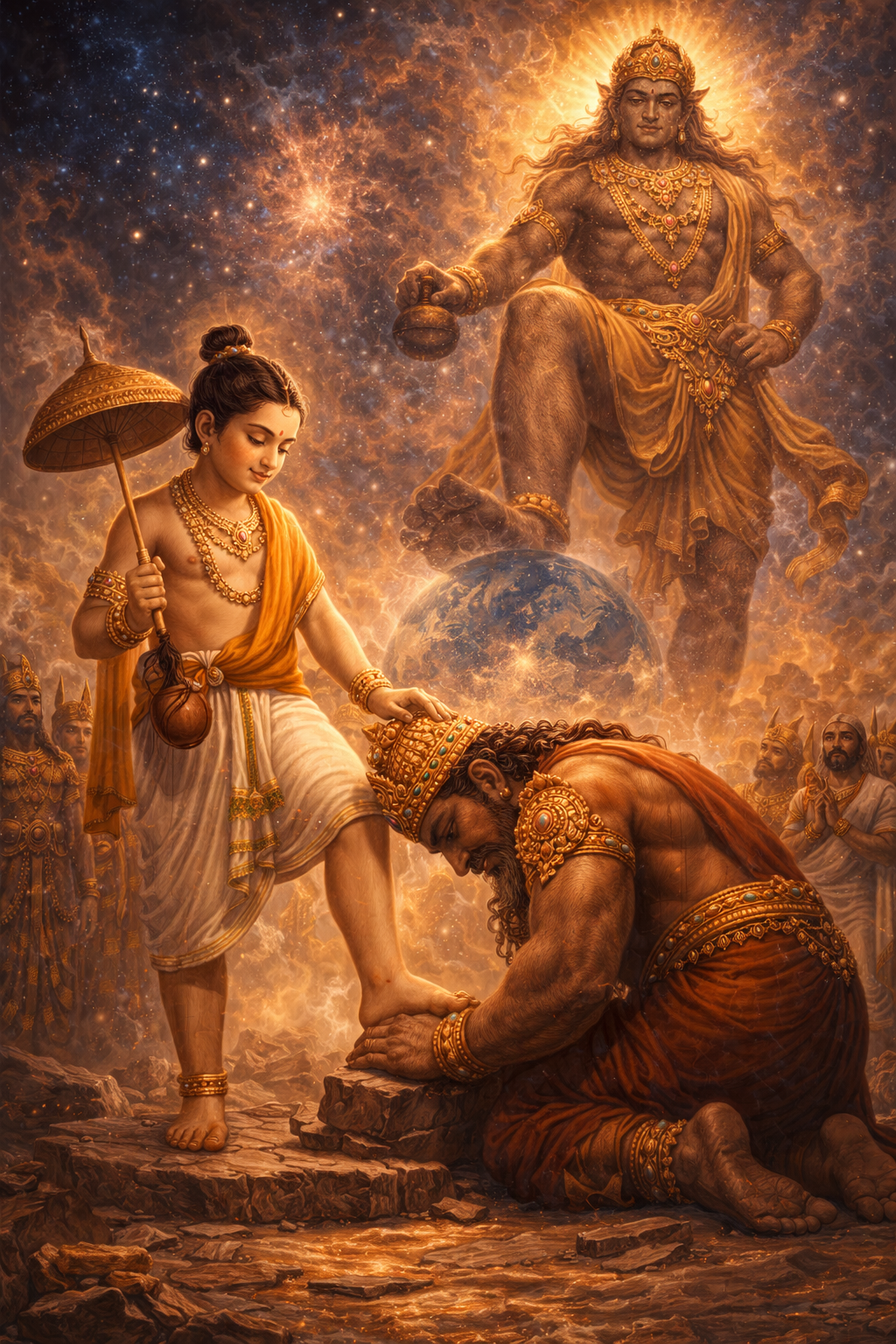
During a grand sacrifice conducted by Mahabali, Vāmana approached him and asked for three steps of land—measured by his own feet.
Despite warnings from his guru, Mahabali honored his promise.
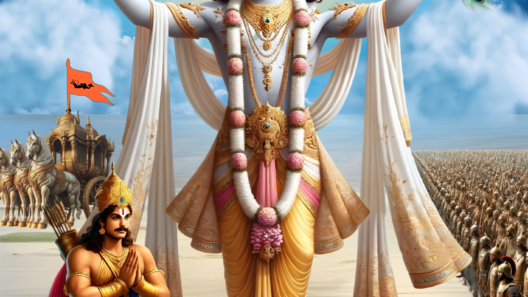
Vāmana then revealed his cosmic form as Trivikrama:
With the first step, he covered the Earth
With the second step, he covered the heavens
With nowhere left for the third step, Mahabali bowed and offered his own head.
The Third Step and Liberation
Vāmana placed his third step on Mahabali’s head, pushing him to Pātāla (the netherworld)—not as punishment, but as protection.
Impressed by Mahabali’s humility and devotion, Vishnu granted him:
Liberation
Immortality
The role of future Indra in the next cosmic cycle
Here, surrender—not defeat—completed Dharma.
Symbolism of the Vāmana Avatāra
Dwarf form – Humility and simplicity
Three steps – Earth, Heaven, and Ego
Trivikrama – Infinite reality beyond appearances
Mahabali’s surrender – True devotion through humility
Vāmana teaches that Dharma expands infinitely, but ego must yield.
Spiritual and Modern Relevance
Vāmana Avatāra speaks strongly to modern life:
Power must be tempered with humility
Charity without surrender feeds ego
True greatness bows before truth
It reminds us that spiritual growth begins when we make space for something greater than ourselves.
Simple Takeaway
Dharma does not always overpower—it outgrows.
Vāmana Avatāra teaches that humility can realign the universe.
🪔 Key Lessons from Vāmana Avatāra (5th Avatāra)
Humility is greater than dominance
Promises rooted in truth must be honored
Ego limits even righteous power
Surrender leads to liberation
Divine wisdom often appears simple
🔍 Short Summary
The Vāmana Avatāra (Fifth Avatāra of Vishnu) shows how Dharma restores balance through humility rather than force. By gently humbling the righteous yet powerful King Mahabali, Vishnu demonstrated that true devotion lies in surrender. Vāmana teaches that when ego steps aside, grace takes over.
Explore the next chapter of the Dashavatara with the story of Parashurama Avatara.


